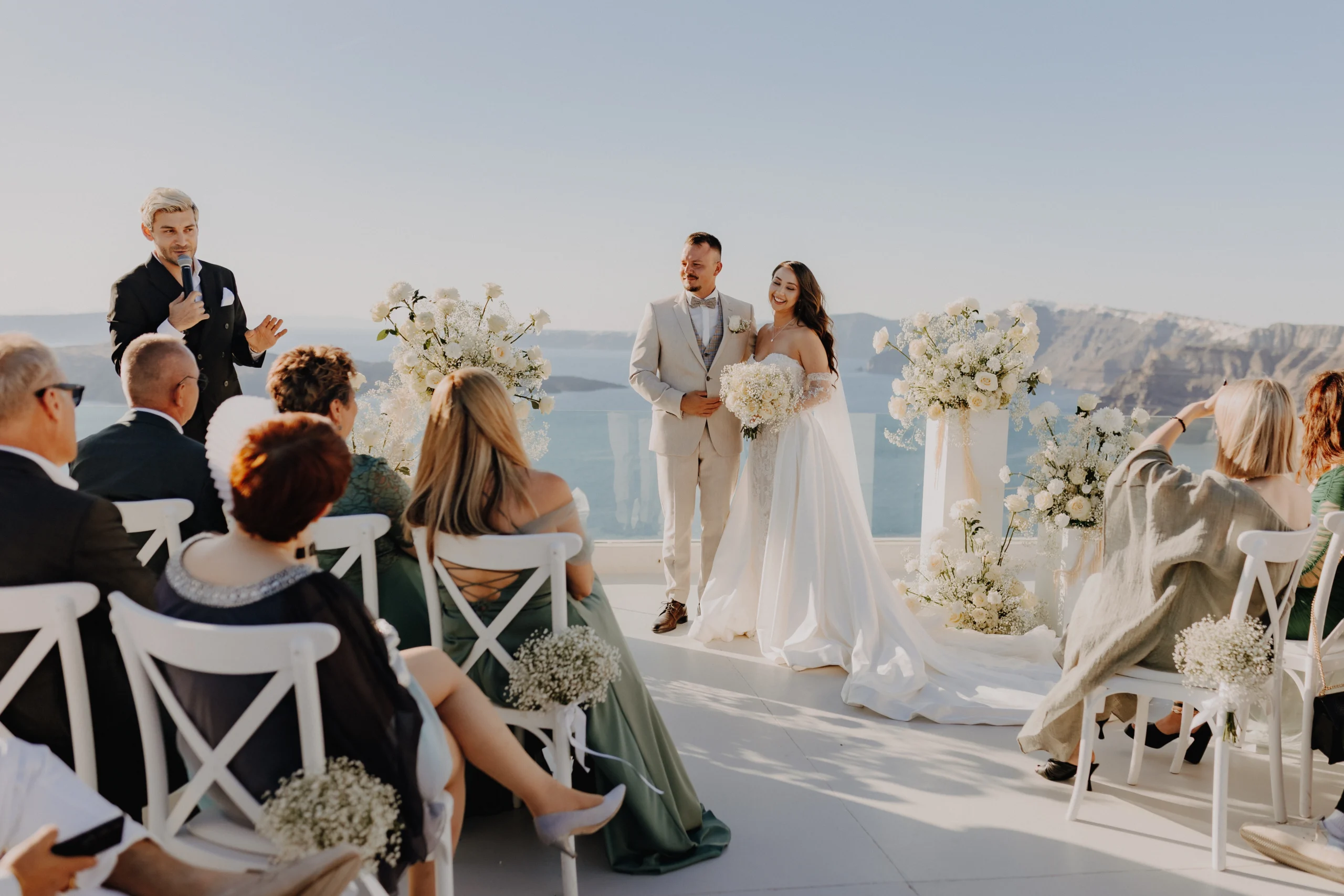
The wedding moderator Duo Fasol has enriched Moroccan weddings several times with the entertainment program. No matter what you say, Moroccan wedding is filled with energy, dancing and incredible vibes. The guests just can’t be beat.
We did some research to find out what a traditional Moroccan wedding looks like. It may be that some traditions are no longer up to date. But what remains relevant in any case is the mood at such a wedding. We are always happy to take orders from our Moroccan friends!
Wonderful Moroccan Wedding and Customs
A wedding can last four to seven days, depending on how wealthy and respected the couple’s families are.
Although a Moroccan wedding is a very expensive celebration in its scope, which requires a lot of money, in Morocco they believe that it happens only once in a lifetime, so it should go well.
The wedding formalities begin a year before the official ceremony. They represent the conclusion of a verbal contract in which the bride’s family joins the groom’s family to discuss all the details (mainly money) related to the wedding. When all the paperwork is done, it means the end of the engagement and the start of preparations for the wedding event.
According to custom, the newlyweds are disguised by their friends, one of their relatives or a woman invited for the purpose. They do her makeup, put on beautiful jewelry, carefully arrange her hair into a hairstyle that no one will ever see, while the bride then dons a fabric headdress with a veil that is laid in a special way.
Moroccan wedding dresses are very beautiful. They are sewn of satin, silk, taffeta, muslin, they are long and loose, decorated with embroidery and sequins, with a wide belt.
The bride’s attire is often adorned with flowers or shells, symbolizing the bride’s innocence and purity.
The groom gives his chosen one many gifts, most of which have symbolic meaning, such as milk, sugar, dates. Other gifts are meant to show the groom’s material wealth. All are served on large trays with conical lids.
The wedding takes place in a separate room. It begins, without exception, with the reading of the Koran according to Muslim custom, as well as verses and chants praising the Prophet.
The Moroccan bride does not acquire the status of a wife after marriage, but only when, after the ceremony, she walks three times around her husband’s house and then enters it as hostess.
The wedding action continues to the endless sounds of national instruments, drums, rhythms of folk dances and music accompanies the newlyweds throughout the wedding week.
During wedding events, the Moroccan bride has to constantly change into different dresses. Sometimes she changes up to seven outfits for the ceremony. After the next outfit change, she sits on a special throne under the admiring gazes of the guests. The last of the outfits is a beautiful white wedding dress.
The wedding table in Morocco is diverse: meat stew with plums and almonds; traditional couscous, pigeons baked with orange blossom, seafood casseroles, a large number of different sweets with nuts, oranges and lemons, fruits and mint tea. The most popular wedding dish is pastila. Pastilla is a round puff pastry filled with pigeon or chicken meat, cinnamon, almonds and sugar.
If you are interested in hosting your upcoming Moroccan wedding, contact the Fasol showman team and find out today what the entertainment program for your wedding could look like.
Wedding in Morocco
A real wedding in Morocco usually starts in the early evening, around 9 p.m. The bride and groom are served cake. After that, the bride and groom are allowed to enter the room. While the wedding celebration is in full swing, the bride, who is being looked after by Negafa, sneaks out several times to change her dress and surprise her groom and guests.
After the wedding, both families meet at the groom’s parents’ house and enjoy a good meal together. This is the first meal for the bride and groom. In this region, the Sahara is quite far away, but the bride and groom would definitely not miss out on tea in the desert after the Berber ritual. The Agafay Desert near Marrakech does not offer the spectacle of huge dunes, but it does offer wedding tourists an atmosphere of peace and security.